2026-11-08 Sun
■ #6404. B&C の第67節 "The Scandinavian Influence: The Viking Age" (2) --- Taku さんとの超精読会 [bchel][oe][viking][history][old_norse][voicy][heldio][helwa]
略奪に始まり,征服に終わる.ロシアからグリーンランド,さらには北米の沿岸にまで及んだヴァイキングの足跡を,B&C はわずか数行で駆け抜けます.前回に引き続き,私の帰国後初,1年ぶりの対面で開催された超精読会の続きです.Taku さんこと金田拓さん(帝京科学大学)と,Baugh and Cable の A History of the English Language, 6th ed. を読み進めています.今回お届けするのは「#1988. ロマン溢れるヴァイキング時代の記述 --- 英語史の古典的名著 Baugh and Cable を読む (67-2) with Taku さん」です.
8世紀半ばに動き出したスカンディナヴィアの人々は,北海とバルト海に面したあらゆる土地を襲い始めました.スウェーデン人はロシアに王国を築きます.ノルウェー人はブリテン諸島の一部,フェロー諸島,アイスランドに植民し,そこからグリーンランド,ラブラドル,ニューファンドランドの沿岸へと進みました.デーン人はノルマンディー公国を建て,ついにはイングランドを征服します.その頂点が,11世紀初頭のデンマーク王 Cnut によるイングランド王位の獲得でした.Cnut はイングランドの都からスカンディナヴィア世界の大部分を治めたのです.
ノルマンディー公国の建設者もまたヴァイキングだったという点は,英語史の観点からも見逃せません.1066年のノルマン征服は,いわばフランス語化したヴァイキングの子孫による2度目の来襲だったともいえるからです.この見方については「#4454. 英語とイングランドはヴァイキングに2度襲われた」 ([2021-07-07-1]) をご覧ください.
そして脚注11では,viking という語の語源が取り上げられています.古ノルド語 vīc 「入り江」に由来し,「入り江から出てきた者,入り江に出入りする者」を表すとする説が一般的です.一方で,古英語 wīc 「野営地」に由来するという説もあり,こちらは襲撃に際して一時的な野営地を設けたことに着目しています.入り江の民か,野営地の民か.どちらを採るかで,ヴァイキング像も微妙に変わってきそうです.この語源問題は「#1610. Viking の語源」 ([2013-09-23-1]) でも取り上げました.今回精読した英文を以下に掲げます (Baugh and Cable, p. 88) .
They began a series of attacks upon all the lands adjacent to the North Sea and the Baltic. Their activities began in plunder and ended in conquest. The Swedes established a kingdom in Russia; Norwegians colonized parts of the British Isles, the Faroes, and Iceland, and from there pushed on to Greenland and the coasts of Labrador and Newfoundland; the Danes founded the dukedom of Normandy and finally conquered England. The pinnacle of their achievement was reached in the beginning of the eleventh century when Cnut, king of Denmark, obtained the throne of England, conquered Norway, and from his English capital ruled the greater part of the Scandinavian world. The daring sea rovers to whom these unusual achievements were due are commonly known as Vikings,11 and the period of their activity, extending from the middle of the eighth century to the beginning of the eleventh, is popularly known as the Viking Age. It was to their attacks upon, settlements in, and ultimate conquest of England that the Scandinavian influence upon Old English was due.
11 The term viking is usually thought to be derived from Old Norse vīc, a bay, as indicating "one who came out from, or frequented, inlets of the sea." It may, however, come from OE wīc, a camp, "the formation of temporary encampments being a prominent feature of viking raids" (OED).
地図を広げながら読みたくなる,まさにロマン溢れる1節です.とはいえ B&C の関心は,あくまで最後の1文にあります.イングランドへの襲撃,定住,そして征服.この3段階こそが,古英語に対するスカンディナヴィアの影響の源だったのです.ここから先,話はいよいよ英語そのものへと向かっていきます.続きはぜひ配信本編で.過去回のアーカイブは「#5291. heldio の「英語史の古典的名著 Baugh and Cable を読む」シリーズが順調に進んでいます」 ([2023-10-22-1]) にまとまっています.精読ギャラリーの一員として会に加わってみたい方は,Voicy のプレミアムリスナー限定配信チャンネル「英語史の輪 (helwa)」の門を叩いてみてください.
関連して,「#1611. 入り江から内海,そして大海原へ」 ([2013-09-24-1]),「#6284. 英語史を育んだ北海 --- だから私は泳いだ」 ([2026-07-11-1]) も参照.
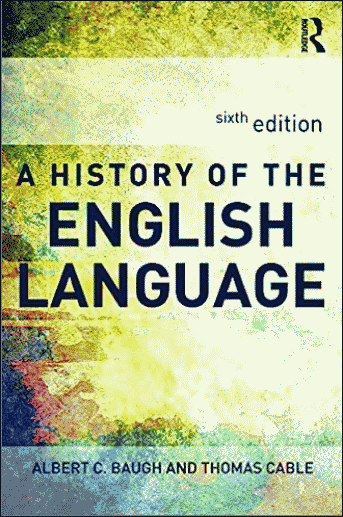
・ Baugh, Albert C. and Thomas Cable. A History of the English Language. 6th ed. London: Routledge, 2013.
2026-11-01 Sun
■ #6397. B&C の第67節 "The Scandinavian Influence: The Viking Age" (1) --- Taku さんとの超精読会 [bchel][oe][viking][history][old_norse][voicy][heldio][helwa]
去る10月10日(土)の午前中,私が研究休暇を終えての帰国後初めてとなる,実に1年ぶりの対面での超精読会が開催されました.Baugh and Cable の A History of the English Language, 6th ed. を,Taku さんこと金田拓さん(帝京科学大学)とともに丁寧に読み進めていく「超精読会」.画面越しではなく同じ机を挟んで英文に向き合うと,やはり熱量が違います.Taku さんと私はもちろん,会場で見守ってくださった精読ギャラリーの皆さんも,終始興奮気味でした.その熱気をそのまま「#1981. 久しぶりの対面超精読会でついにヴァイキングの節へ --- 英語史の古典的名著 Baugh and Cable を読む (67-1) with Taku さん」としてお届けします.
興奮の理由はもう1つあります.前回までの第66節までは,しばらく古英語に対するラテン語の影響について読んできました.今回からは心機一転,新たな第67節に入ります.皆大好き,ヴァイキングの登場です.B&C は古英語期の外国語の影響として,ケルト語,ラテン語に続く第3の影響として,スカンディナヴィアの言語,すなわち古ノルド語 (old_norse) との接触を位置づけています.
もっとも,節の冒頭はまだ言語の話ではなく歴史の話です.ある民族が,分析しがたい原因によって突如として歴史の表舞台に躍り出る.一時は華々しい役割を演じ,やがてまた目立たない存在へと退いていく.B&C は,スカンディナヴィア半島とデンマークに住まっていた北ゲルマンの人々を,まさにそうした民族の例として描き出します.彼らはかつてアングロサクソン人の隣人であり,言語的にも血縁的にも近しい間柄でした.何世紀ものあいだ北の故郷で静かに暮らしていた彼らが,8世紀になると,経済的なものか政治的なものか定かでない変化をきっかけに,"a spirit of unrest and adventurous enterprise" に駆られるようになったというのです.ロマン溢れる筆致に,読み手の気分も自然と高まりますね.ヴァイキングの移動の背景については「#2889. ヴァイキングの移動の原動力」 ([2017-03-25-1]) も参照してください.今回精読した英文を以下に掲げます (Baugh and Cable, pp. 87--88) .
67. The Scandinavian Influence: The Viking Age. Near the end of the Old English period English underwent a third foreign influence, the result of contact with another important language, the Scandinavian. In the course of history it is not unusual to witness the spectacle of a nation or people, through causes too remote or complex for analysis, suddenly emerging from obscurity, playing for a time a conspicuous, often brilliant, part, and then, through causes equally difficult to define, subsiding once more into a relatively minor sphere of activity. Such a phenomenon is presented by the Germanic inhabitants of the Scandinavian peninsula and Denmark, one-time neighbors of the Anglo-Saxons and closely related to them in language and blood. For some centuries the Scandinavians had remained quietly in their northern home. But in the eighth century a change, possibly economic, possibly political, occurred in this area and provoked among them a spirit of unrest and adventurous enterprise.
ラテン語の影響が主に宗教や学問の語彙を通じたものだったのに対し,古ノルド語の影響は,日常の基本語から文法にまで及ぶ,より深い接触の産物でした.その具体的な姿は,これからの精読でじっくりと味わっていくことになります.今後の展開にも乞うご期待.過去回は「#5291. heldio の「英語史の古典的名著 Baugh and Cable を読む」シリーズが順調に進んでいます」 ([2023-10-22-1]) からたどれます.
同じ机を囲んで,あるいは画面越しに議論に加わってみたいという方は,Voicy のプレミアムリスナー限定配信チャンネル「英語史の輪 (helwa)」へもぜひ.
・ Baugh, Albert C. and Thomas Cable. A History of the English Language. 6th ed. London: Routledge, 2013.
2026-10-21 Wed
■ #6386. B&C の第66節 "The Extent of the Influence" (3) --- Taku さんとの超精読会 [bchel][oe][vocabulary][lexicology][latin][loan_word][borrowing][link][voicy][heldio][helwa]
今回精読したのは,たったの1文です.それでも,議論は尽きませんでした.Taku さんこと金田拓さん(帝京科学大学)と Baugh and Cable の A History of the English Language, 6th ed. を読み進める超精読会,第66節の第3回をお届けします.「#1970. 英語史の古典的名著 Baugh and Cable を読む (66-3) with Taku さん --- オンラインオフ会より」です.その1文とは,節の締めくくりとなる次の英文です (Baugh and Cable, p. 87) .
The Latin influence of the Second Period was not only extensive but thorough and marks the real beginning of the English habit of freely incorporating foreign elements into its vocabulary.
まず "the Second Period" です.B&C は古英語期のラテン語の影響を,大陸時代のゼロ期,ケルト人を介した第1期,そしてキリスト教伝来に伴う第2期に分けて論じてきました.ここで総括されているのは,その第2期です.650年頃を境とするラテン借用語の性質の違いについては,「#3787. 650年辺りを境とする,その前後のラテン借用語の特質」 ([2019-09-09-1]) もご参照ください.
次に "not only extensive but thorough".この2つの形容詞は,偶然並んでいるわけではありません.extensive は (1) で見た450語,350語という「広がり」を,thorough は (2) で見た品詞転換や接尾辞付加による「同化の深さ」を,それぞれ受けています.第66節全体の議論が,この2語に圧縮されているのです.
そして後半の "the real beginning of the English habit of freely incorporating foreign elements".外来要素を自由に取り込むという英語の「習慣」は,中英語期のフランス語や近代英語期のラテン語・ギリシア語からの大量借用によって語られることが多いものです.しかし B&C は,その「本当の始まり」をこの古英語期のラテン語の影響に置いています.habit という語には,一度身についたら抜けにくい「癖」のニュアンスすら感じられます.freely という副詞も,古英語の自由奔放さを示しています.
今回の会で特筆すべきは,会場で精読の様子を見守っていたギャラリーの皆さんからもコメントが寄せられ,議論がいっそう深まったことです.1文を前にして,読み手の数だけ視点が増えていく.その過程は,ぜひ配信本編でお聴きください.
このように議論の輪に加わってみたいという方は,Voicy のプレミアムリスナー限定配信チャンネル「英語史の輪 (helwa)」の門を叩いてみてください.精読ギャラリーの一員として参加すると,超精読がいっそう楽しくなります.過去回は「#5291. heldio の「英語史の古典的名著 Baugh and Cable を読む」シリーズが順調に進んでいます」 ([2023-10-22-1]) にまとまっています.
・ Baugh, Albert C. and Thomas Cable. A History of the English Language. 6th ed. London: Routledge, 2013.
2026-10-18 Sun
■ #6383. B&C の第66節 "The Extent of the Influence" (2) --- Taku さんとの超精読会 [bchel][oe][vocabulary][lexicology][latin][loan_word][borrowing][link][voicy][heldio][helwa]
借用した名詞に本来語の語尾を付けて,さっさと動詞に作り替えてしまう.ラテン語から入った単語が,そこまで手荒に(?)扱われるようになったとき,その単語は真に英語の一員になったといえるのではないか.今回の精読は,そんな「同化」の具体的な姿に迫ります.お届けするのは「#1967. 英語史の古典的名著 Baugh and Cable を読む (66-2) with Taku さん --- オンラインオフ会より」.Baugh and Cable の A History of the English Language, 6th ed. を,Taku さんこと金田拓さん(帝京科学大学)と読み進める超精読会の続きです.
前回の最後で,B&C は他言語からの影響の試金石を「同化の度合い」に置きました.今回はその中身の説明です.同化とは,単に生き残ることではない.本来語と見分けがつかなくなるほど消化され,本来語と同じように複合語に加わったり,別の品詞に作り替えられたりするようになることだ,と B&C は述べます.
その典型例が,ラテン語 planta に由来する名詞 plant です.これに不定詞語尾 -ian を付ければ,動詞 plantian のできあがりです.古英語において,名詞から動詞への品詞転換 (conversion) が,借用語にも本来語とまったく同じ手続きで適用されているわけです.gemartyrian, sealmian, culpian, fersian, glēsan, crispian と,例は次々に挙がります.
さらに,-dōm, -hād, -ung という本来語の接尾辞 (suffix) が,借用語 martyr に付いて抽象名詞が作られたという例も挙げられています.martyrdōm は,今なお martyrdom として現役ですね.
外来の語幹に本来語の接辞が組み合わさった混種語 (hybrid) は,後の英語では珍しくなくなりますが,その萌芽がすでに古英語期に見られることは,記憶にとどめておいてよいと思います.今回精読した英文を以下に掲げます (Baugh and Cable, p. 87) .
This is not merely a question of the power to survive; it is a question of how completely the words were digested and became indistinguishable from the native word-stock, so that they could enter into compounds and be made into other parts of speech, just like native words. When, for example, the Latin noun planta comes into English as the noun plant and later is made into a verb by the addition of the infinitive ending -ian (plantian) and other inflectional elements, we may feel sure that the word has been assimilated. This happened in a number of cases, as in gemartyrian (to martyr), sealmian (to play on the harp), culpian (to humiliate oneself), fersian (to versify), glēsan (to gloss), and crispian (to curl). Assimilation is likewise indicated by the use of native formative suffixes such as -dōm, -hād, and -ung to make a concrete noun into an abstract (martyrdōm, martyrhād, and martyrung).
超精読の過去回は「#5291. heldio の「英語史の古典的名著 Baugh and Cable を読む」シリーズが順調に進んでいます」 ([2023-10-22-1]) からたどることができます.超精読を,収録の現場で一緒に味わってみたいという方は,ぜひ Voicy のプレミアムリスナー限定配信チャンネル「英語史の輪 (helwa)」へお越しください.
・ Baugh, Albert C. and Thomas Cable. A History of the English Language. 6th ed. London: Routledge, 2013.
2026-10-14 Wed
■ #6379. B&C の第66節 "The Extent of the Influence" (1) --- Taku さんとの超精読会 [bchel][oe][vocabulary][lexicology][latin][loan_word][borrowing][link][voicy][heldio][helwa]
今回の超精読会は,450,100,350という3つの数字をめぐる読み解きから始まりました.Baugh and Cable の A History of the English Language, 6th ed. は,6回にわたって精読してきた第65節を終え,いよいよ第66節 "The Extent of the Influence" に入ります.キリスト教の伝来によるラテン語の影響は,結局のところ「どれほどの規模」だったのか.その総括にあたる節です.配信回は「#1963. 英語史の古典的名著 Baugh and Cable を読む (66-1) with Taku さん --- オンラインオフ会より」.今回も,Taku さんこと金田拓さん(帝京科学大学)と1文ずつ読み進めています.まずは今回精読した英文を掲げます (Baugh and Cable, p. 87) .
To be sure, the extent of a foreign influence is most readily seen in the number of words borrowed. As a result of the Christianizing of Britain, some 450 Latin words appear in English writings before the close of the Old English period. This number does not include derivatives or proper names, which in the case of biblical names are very numerous. But about 100 of these were purely learned or retained so much of their foreign character as hardly to be considered part of the English vocabulary. Of the 350 words that have a right to be so considered, some did not make their way into general use until later --- were, in fact, reintroduced later. On the other hand, a large number of them were fully accepted and thoroughly incorporated into the language. The real test of a foreign influence is the degree to which the words that it brought in were assimilated.
古英語期の終わりまでに英語の文献に現われたラテン借用語は,およそ450語.ここには派生語や固有名詞は含まれていません.聖書由来の人名などを数え入れれば膨大な数になるはずですが,それは除外されています.さらに,そのうち約100語は学術的な語にとどまるか,外来語としての性格をあまりに強く残していたため,英語の語彙の一部とは見なしがたいものです.残る350語こそが,英語の語彙として認めてよい語ということになります.
しかし,その350語も一枚岩ではありません.一般に広まるのが後の時代までずれ込み,実質的には中英語期以降に「再借用」されたものも含まれているからです.古英語期に一度入ったからといって,その語が現代まで途切れずに使われ続けてきたとは限らない.借用語の数を数えるという一見単純な作業が,実は語の借用のされ方の質を問う作業と切り離せないことがよく分かります.古英語のラテン借用語の数そのものについては,「#5564. 古英語のラテン語からの借用語はせいぜい数百語」 ([2024-07-21-1]) や「#3789. 古英語語彙におけるラテン借用語比率は1.75%」 ([2019-09-11-1]) もご参照ください.中英語期以降の怒濤の借用と比べれば,規模としてはつつましいものです.
そして段落の最後の1文で,B&C は議論の軸を数から質へと切り替えていきます.外国語の影響を測る本当の試金石は,持ち込まれた語がどの程度「同化」されたかにある,と.では,同化したとはどういう状態を指すのか.その具体的な中身は,次回の精読で明らかになります.
この B&C 超精読シリーズの過去回へのリンクは,「#5291. heldio の「英語史の古典的名著 Baugh and Cable を読む」シリーズが順調に進んでいます」 ([2023-10-22-1]) にまとまっています.新しい節の始まりは,途中から参加するのにちょうどよいタイミングです.原書を手元に,音声を副読本としてお付き合いいただければ.
・ Baugh, Albert C. and Thomas Cable. A History of the English Language. 6th ed. London: Routledge, 2013.
2026-10-12 Mon
■ #6377. 『ケルズの書』とともに味わいたい至宝 --- Tara Brooch と Ardagh Chalice [dublin][tabihel][ireland][christianity][bchel][oe][latin][anglo-saxon][history][tabihel_dublin]
ダブリンの英語史に関連する場所を訪ねて歩く「旅hel」 (tabihel) シリーズ.「#6373. アイルランドの至宝『ケルズの書』を訪ねて --- The Book of Kells」 ([2026-10-08-1]) に続き,先月ダブリンで訪ねてきた至宝を取り上げたい.ダブリン中心部の Kildare Street に面したアイルランド国立博物館(考古学館)の至宝といえば,Tara Brooch と Ardagh Chalice の2つが挙げられる.
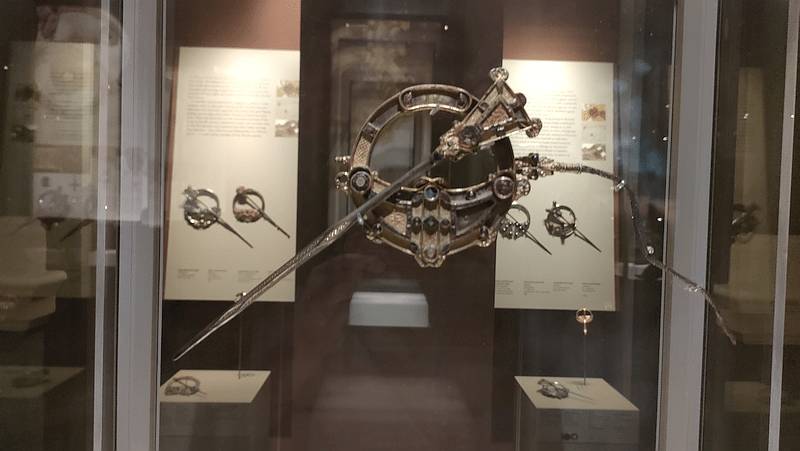
まずは Tara Brooch.外套を留めるための装飾ブローチで,紀元700年前後の作とされる.19世紀半ばに Meath 州の海岸近くで発見されたもので,実はアイルランド上王の座として名高い Tara の丘とは直接の関係はない.由緒ありげな名前を付けて売り出そうという動機で命名されたものだという.銀をベースに,金線細工,琥珀,ガラスで飾られた小さな円環のなかに,渦巻文様,組紐模様,動物文様がぎっしりと詰め込まれている.身につけたときには見えないはずの裏面にまで精緻な装飾が施されており,オシャレの極致だ.
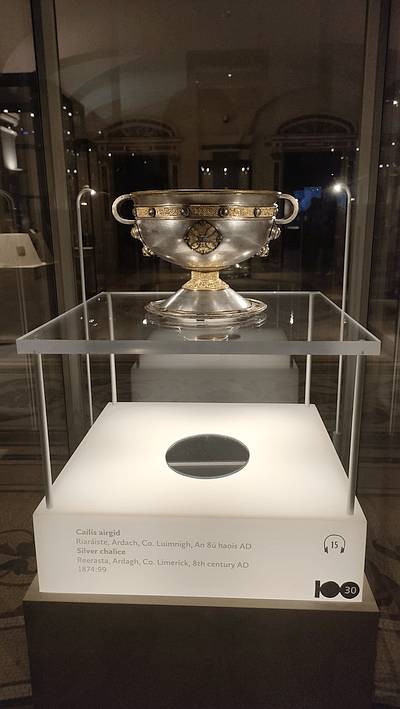
続いて Ardagh Chalice.8世紀の作とされるミサ用の聖杯で,19世紀後半に Limerick 州 Ardagh 近郊の環状砦跡から発見された.銀の器に金線細工,七宝の装飾が配され,鉢の周りにはラテン語が刻まれている.簡素で端正な器形と,細部の贅を尽くした装飾との対比が見所だ.
2つの至宝は,時代的にも意匠的にも,『ケルズの書』と同じ文脈で鑑賞することができる.ケルト古来の渦巻文様,アングロサクソン的な組紐模様と動物文様,そして地中海世界のキリスト教的モチーフが各々の作品のなかで融合し完結しているのだ.いずれも,アイルランド・キリスト教が様々な文化の影響を受けて最も輝いていた,8世紀を中心とする時期の産物である.『ケルズの書』ではフォリオの上で展開されていた繊細な美意識が,金属細工にもそのまま息づいていることが分かる.
英語史にとって重要なのは,アイルランド・キリスト教の伝統がアイルランドに閉じていなかったことである.アイルランド系の修道士たちは Iona を拠点とし,さらにブリテン島北部の Lindisfarne へと進出した.Northumbria を中心とするブリテン島北部はこの島嶼キリスト教の流れを受け継ぎ,前回の記事でも触れた Lindisfarne Gospels に代表される古英語期のキリスト教文化を育んでいった.南から入った Augustine 以来のローマ系の伝道と並んで,この北からの流れが,アングロサクソン人のキリスト教化を支えたのである.
そして,アングロサクソンのキリスト教化はそのままラテン語の英語への流入を意味した.ラテン語はキリスト教という文化の乗り物だったのである.キリスト教とともに古英語に流れ込んだラテン借用語の数々,そしてラテン語のインスピレーションを受けつつも直接的な借用に頼らず本来語を駆使して新概念を表現した古英語の創造性については,目下 Baugh and Cable の超精読会で読み進めているところである.以下の記事などを参照.
・ 「#5686. B&C の第60節 "Latin Influence of the Second Period" の第1段落を対談精読実況生中継しました」 ([2024-11-20-1])
・ 「#5962. B&C の第62節 "The Earlier Influence of Christianity on the Vocabulary" (1) --- Taku さんとの超精読会」 ([2025-08-23-1]
・ 「#6262. B&C の第64節 "Influence of The Benedictine Reform on English" (1) --- Taku さんとの超精読会」 ([2026-06-19-1])
・ 「#6300. B&C の第65節 "The Application of Native Words to New Concepts" (1) --- Taku さんとの超精読会」 ([2026-07-27-1])
ブローチと聖杯を眺めながら,千数百年前の島嶼世界の芸術的熱量が,めぐりめぐって間接的に現代の英語の語彙にも刻み込まれているのを感じていた.
2026-09-27 Sun
■ #6362. B&C の第65節 "The Application of Native Words to New Concepts" (6) --- Taku さんとの超精読会 [bchel][oe][borrowing][semantic_change][christianity][lexicology][latin][loan_word][link][voicy][heldio][anglo-saxon][history][helmate][helwa]
息長く続いている,Baugh and Cable の名著 A History of the English Language, 6th ed. を helwa の Taku さんと読み進める超精読会.第65節も終盤です.「#1946. 英語史の古典的名著 Baugh and Cable を読む (65-6) with Taku さん --- helwa 北千住オフ会より」をお届けします.ナビゲーターは,今回も Taku さんこと金田拓さん(帝京科学大学)です.
今回扱うのは「悪魔」「十字架」「復活」「罪」「最後の審判」といった,キリスト教の教義に不可欠な語彙群です.diabolus はそのまま dēofol(devil)として借用されましたが,本来語の同義語 fēond(fiend)も並行して用いられました.十字架は rōd, trēow, gealga.復活は ārīsan(起き上がる)由来の ǣrist.罪を表す語にいたっては,synn のほか mān, firen, leahtor, wōh, scyld と,実に多彩な本来語が並びます.最後の審判は素朴に Doomsday.
借用語と本来語がこれほど豊かに並存していたことに驚かされます.そして本節は,重要な一般論で締めくくられます.他言語からの言語的影響は,取り込んだ借用語の数だけで測れるものなのか.むしろその影響が,言語自身の内なる創造性をどれだけ刺激し,本来語の資源をどれだけ引き出したかにこそ,真の意義があるのではないか.この節は,そんな問いを投げかけて終わります.今回精読した英文を以下に掲げましょう (Baugh and Cable, pp. 86--87) .
Latin diabolus was borrowed as dēofol (devil), but we find fēond (fiend) as a common synonym. Examples might be multiplied. Cross is rōd (rood), trēow (tree), gealga (gallows), and so forth; resurrection is ǣrist, from ārīsan (to arise); peccatum is synn (sin), while other words like mān, firen, leahtor, wōh, and scyld, meaning 'vice', 'crime', 'fault', and the like, are commonly substituted. The Judgment Day is Doomsday. Many of these words are translations of their Latin equivalents and their vitality is attested by the fact that in a great many cases they have continued in use down to the present day. It is important to recognize that the significance of a foreign influence is not to be measured simply by the foreign words introduced but is revealed also by the extent to which it stimulates the language to independent creative effort and causes it to make full use of its native resources.
この B&C 超精読シリーズの過去回は,「#5291. heldio の「英語史の古典的名著 Baugh and Cable を読む」シリーズが順調に進んでいます」 ([2023-10-22-1]) に過去回へのリンクがまとまっています.原書をお持ちの方は,ぜひ音声を副読本代わりに,今回の1節を味わっていただければと思います.
・ Baugh, Albert C. and Thomas Cable. A History of the English Language. 6th ed. London: Routledge, 2013.
2026-09-20 Sun
■ #6355. B&C の第65節 "The Application of Native Words to New Concepts" (5) --- Taku さんとの超精読会 [bchel][oe][borrowing][semantic_change][christianity][lexicology][latin][loan_word][link][voicy][heldio][anglo-saxon][history][helmate][helwa][loan_translation]
Baugh and Cable の名著 A History of the English Language, 6th ed. を,helwa の Taku さんこと金田拓さん(帝京科学大学)さんとともに1文(いな1語)ずつ読み進めていく「超」精読会.「#1939. 英語史の古典的名著 Baugh and Cable を読む (65-5) with Taku さん --- helwa 北千住オフ会より」です.
前回は「洗礼」「聖餐」「捧げ物」といった単語が,借用語に頼らず本来語の意味拡張によって表現されていたことを見ました.今回はその射程がさらに広がります.対象は「聖典」「福音」「三位一体」,そして神・キリスト・聖霊そのものを指す語彙です.Scriptures に対応する gewritu,evangelium に対応する godspell,Trinity に対応する þrines(3性).神という概念だけでも,scieppend(形づくる者),fruma(創始者),metod(測る者)という複数の本来語が並行して用いられていました.さらに fæder, dryhten, wealdend, þēoden, weard, hlæford といった,父・君主・支配者・守護者を意味する語群までもが,神やキリストを指す同義語として重ねて用いられています.
興味深いのは,godspell が現代英語に gospel としてそのまま生き残っている一方,gewritu は廃れ,ラテン系の Scripture(s) にその座を譲ったことです.同じように古英語において本来語で置き換えられた語彙のなかにも,その後の歴史を通じて生き残ってきたものと消えていったものがあります.この明暗にこそ,英語史の醍醐味が宿っています.今回精読した英文を以下に掲げます (Baugh and Cable, p. 86) .
The term Scriptures found its exact equivalent in the English word gewritu, and ēvangelium was rendered by godspell, originally meaning good tidings. Trinity (L. trinitas) was translated þrines (three-ness), the idea of God the Creator was expressed by scieppend (one who shapes or forms), fruma (creator, founder), or metod (measurer). Native words like fæder (father), dryhten (prince), wealdend (ruler), þēoden (prince), weard (ward, protector), and hlāford (lord) are frequent synonyms. Most of them are also applied to Christ, originally a Greek word and the most usual name for the Second Person of the Trinity, but Hǣlend (Savior) is also commonly employed. The Third Person (Spiritus Sanctus) was translated Hālig Gāst (Holy Ghost).
「対面/オンラインで議論に参加してみたい」という方は,ぜひ Voicy のプレミアムリスナー限定配信チャンネル「英語史の輪 (helwa)」の門を叩いてみてください.古英語話者たちの豊かな言語感覚を,皆さんもぜひ一緒に味わってみませんか.過去回は「#5291. heldio の「英語史の古典的名著 Baugh and Cable を読む」シリーズが順調に進んでいます」 ([2023-10-22-1]) にまとまっています.
・ Baugh, Albert C. and Thomas Cable. A History of the English Language. 6th ed. London: Routledge, 2013.
2026-09-13 Sun
■ #6348. B&C の第65節 "The Application of Native Words to New Concepts" (4) --- Taku さんとの超精読会 [bchel][oe][borrowing][semantic_change][christianity][lexicology][latin][loan_word][link][voicy][heldio][anglo-saxon][history][helmate][helwa][loan_translation]
キリスト教の中核をなす概念を,ラテン語からの借用に頼らず,本来語の意味を巧みに転用することで表現していく.そんな古英語期の言語的創意工夫を物語るテーマを,Baugh and Cable の名著 A History of the English Language, 6th ed. を通じて Taku さんと読み進める「超精読会」の最新回でお届けします.
今朝の heldio 最新回は,「#1932. 英語史の古典的名著 Baugh and Cable を読む (65-4) with Taku さん --- helwa 北千住オフ会より」です.今回もナビゲーターは,helwa/heldio ではお馴染みの Taku さんこと金田拓さん(帝京科学大学)が務めてくださいました.
今回は前回に引き続きキリスト教に関連する動詞や名詞が本来語で表現される例が挙げられています.具体的には「洗礼」「聖餐」「捧げ物」という,キリスト教の教義の核心に触れる単語群です.借用語ではなく,本来語の意味の拡張・応用によってどう表現されたかが読みどころです.
fullian(清める)から派生した fulluht(洗礼)は,fulluht-bæþ(洗礼盤)や fulluht-fæder(名付け親)など,数々の複合語を生み出しました.また,ゲルマン語本来の hūsl(聖餐)や lāc(捧げ物)が,キリスト教の儀式を指す語として転用されている点も要注目です.異教の語彙が新しい宗教的な意味の器として再利用される --- ここに,古英語話者たちの言語的な戦略が見て取れます.今回精読した英文を以下に掲げましょう (Baugh and Cable, p. 86) .
For baptize (L. baptizāre), the English adapted a native word fullian (to consecrate), while its derivative fulluht renders the noun baptism. The latter word enters into numerous compounds, such as fulluht-bæþ (font), fulwere (baptist), fulluht-fæder (baptizer), fulluht-hād (baptismal vow), fulluht-nama (Christian name), fulluht-stōw (baptistry), fulluht-tīd (baptism time), and others. Even so individual a feature of the Christian faith as the sacrament of the Lord's Supper was expressed by the Germanic word hūsl (modern housel), while lāc, the general word for sacrifice to the gods, was also sometimes applied to the Sacrifice to the Mass.
1文ずつ丁寧に読み解いていくこの営みは,地味に見えて,実は英語史のおもしろさの核心に触れる時間でもあります.過去回のアーカイブは「#5291. heldio の「英語史の古典的名著 Baugh and Cable を読む」シリーズが順調に進んでいます」 ([2023-10-22-1]) からたどれます.ご興味を持たれた方は,Voicy のプレミアムリスナー限定配信チャンネル「英語史の輪 (helwa)」へもぜひ.
・ Baugh, Albert C. and Thomas Cable. A History of the English Language. 6th ed. London: Routledge, 2013.
2026-08-01 Sat
■ #6305. B&C の第65節 "The Application of Native Words to New Concepts" (3) --- Taku さんとの超精読会 [bchel][oe][borrowing][semantic_change][christianity][lexicology][latin][loan_word][link][voicy][heldio][anglo-saxon][history][helmate][helwa]
Baugh and Cable の精読シリーズ,第65節を読み進め,議論を重ねています.helwa の仲間たちとともにテキストを念入りに読み解いた北千住オフ会での音声を,Voicy heldio にて公開しております.今回もナビゲーターとして全体を引っ張ってくださったのは,お馴染みの Taku さんこと金田拓さん(帝京科学大学)です.「#1889. 英語史の古典的名著 Baugh and Cable を読む (65-3) with Taku さん --- helwa 北千住オフ会より」をぜひお聴きください.
今回は,キリスト教的な「説教する」「祈る」といった宗教的行為を表わす動詞・名詞において,ラテン語からの直接の借用を避け,アングロサクソン人が元々持っていた本来語の意味を転用させたが扱われています.精読した本文の該当箇所は1文のみで,以下の通りです(Baugh and Cable, p. 86).
Instead of borrowing the Latin word praedicāre (to preach), the English expressed the idea with words of their own, such as lǣran (to teach) or bodian (to bring a message); to pray (L. precāre) was rendered by biddan (to ask) and other words of similar meaning, prayer by a word from the same root, gebed.
今回注目したのは1文のみですが,the English の定冠詞がもつ意味・意義に注目し,著者の英語史や言語変化に対する姿勢を読み解くというエキサイティングな議論が展開しました.改めてキリスト教の布教と用語の問題,それから読書会に立ち会われたヘルメイトからの質問などについても検討し,豊かな議論の時間を過ごすことができました.
これまでの B&C 超精読会のアーカイブは,体系的にまとめられており,いつでもさかのぼって学習することができます.「#5291. heldio の「英語史の古典的名著 Baugh and Cable を読む」シリーズが順調に進んでいます」 ([2023-10-22-1]) に全回へのリンクが整備されておりますので,未聴の回がある方はぜひご参照ください.原書を手元に用意し,音声を副読本のように活用することで,英語史の原典購読の醍醐味を味わっていただけるはずです(使用テキストは最新の第7版ではなく第6版となっております).また,このような精読の輪の中に加わり,一緒に学びを深めたいとお考えの方は,ぜひ Voicy のプレミアムリスナー限定配信チャンネル「英語史の輪 (helwa)」へお越しください.8月の helwa もちょうど本日からスタートです.刺激的で充実した学びの時間が待っています!
・ Baugh, Albert C. and Thomas Cable. A History of the English Language. 6th ed. London: Routledge, 2013.
2026-07-29 Wed
■ #6302. B&C の第65節 "The Application of Native Words to New Concepts" (2) --- Taku さんとの超精読会 [bchel][oe][borrowing][semantic_change][christianity][lexicology][latin][loan_word][link][voicy][heldio][anglo-saxon][history][helmate][helwa]
Baugh and Cable の第6版をじっくりと読み解いていく「超」精読シリーズの続編です.前日に引き続いて,helwa のオフ会で収録した熱気あふれる音声を Voicy heldio にて共有いたします.今回も解説の進行役を務めてくださっているのは,helwa/heldio でお馴染みの Taku さんこと金田拓さん(帝京科学大学)です.ぜひ「#1886. 英語史の古典的名著 Baugh and Cable を読む (65-2) with Taku さん --- helwa 北千住オフ会より」をお聴きいただければと思います.
今回の該当箇所では,ラテン語のキリスト教概念を導入するにあたり,英語がどのような本来語を用いてこれらを表現しようとしたのか,その具体例が多数挙げられています.外来語をそのまま取り入れるのではなく,すでにある自言語の語彙を組み合わせて翻訳借用したり,意味を拡張させたりする手法が観察されます.今回精読した英文3文を提示します(Baugh and Cable, p. 86).
Patriarch was rendered literally by hēahfæder (high father), prophet by wītega (wise one), martyr often by the native word þrōwere (one who suffers pain), and saint by hālga (holy one). Specific members of the church organization such as pope, bishop, and priest, or monk and abbot represented individuals for which the English had no equivalent and therefore borrowed the Latin terms; however, they did not borrow a general word for clergy but used a native expression, ðæt gāstlice folc (the spiritual folk). The word Easter is a Germanic word taken over from a pagan festival, likewise in the spring, in honor of Eostre, the goddess of dawn.
キリスト教宣教団にとって,イングランドの布教のためには,ラテン語の用語を使わずに,土着の人々の言語である古英語を最大限に活用する必要があったにちがいありません.精読会では,この観点を踏まえて突っ込んだ議論が繰り広げられました.皆さんにも一緒にお考えいただき,heldio のコメント欄よりご意見やご質問を寄せていただければと思います.
この B&C 精読会配信回のバックナンバーは,すべて整理されて保存されています.「#5291. heldio の「英語史の古典的名著 Baugh and Cable を読む」シリーズが順調に進んでいます」 ([2023-10-22-1]) に過去の配信回がリスト化されていますので,復習や聞き返しにご活用ください.テキストを片手に音声を聴き進めることで,英語史の理解が着実に深まっていきます(読書会では最新の第7版ではなく第6版を使用していますので,お持ちの版をご確認ください).
さらに,「この濃密な読書会の空間に直接参加してみたい」という方は,ぜひ Voicy のプレミアムリスナー限定チャンネル「英語史の輪 (helwa)」へのご参加をご検討ください.皆さんとともに英語史を深掘りする有意義な時間を共有できます.
・ Baugh, Albert C. and Thomas Cable. A History of the English Language. 6th ed. London: Routledge, 2013.
2026-07-27 Mon
■ #6300. B&C の第65節 "The Application of Native Words to New Concepts" (1) --- Taku さんとの超精読会 [bchel][oe][borrowing][semantic_change][christianity][lexicology][latin][loan_word][link][voicy][heldio][anglo-saxon][history][helmate][helwa]
英語史の名著,Baugh and Cable のテキスト(第6版)を,helwa のメンバーと「超」精読していくシリーズです.先日土曜日の午後に開催された豊かな読書会の音声を,そのまま Voicy heldio でお届けします.いつものように helwa/heldio の盛り上げ役の Taku さんこと金田拓さん(帝京科学大学)に読書会をリードしていただいています.「#1884. 英語史の古典的名著 Baugh and Cable を読む (65-1) with Taku さん --- helwa 北千住オフ会より」をお聴きください.
今回は,"The Application of Native Words to New Concepts" と題する節を読み始めています.前節までにみてきたように,古英語期にはラテン語からの借用語が多く流れ込んできました.しかし,ラテン語の影響の大きさはは,そのような直接の借用語だけをみているだけでは,正確につかめません.ラテン語は,英語本来語にも目に見えにくい間接的な影響を少なからず与えているのです.精読対象となった英文を以下に掲げます(Baugh and Cable, pp. 85--86).最初5文をじっくり読んでいきます.
The words that Old English borrowed in this period are only a partial indication of the extent to which the introduction of Christianity affected the lives and thoughts of the English people. The English did not always adopt a foreign word to express a new concept. Often an old word was applied to a new thing and by a slight adaptation made to express a new meaning. The Anglo-Saxons, for example, did not borrow the Latin word deus because their own word God was a satisfactory equivalent. Likewise, heaven and hell express conceptions not unknown to Anglo-Saxon paganism and are consequently English words.
この B&C 超精読シリーズの過去回は,すべてアーカイヴに保存されており,いつでもお聴きいただけます.「#5291. heldio の「英語史の古典的名著 Baugh and Cable を読む」シリーズが順調に進んでいます」 ([2023-10-22-1]) にリンクがまとまっているので,ご参照ください.バックナンバーみ聴いた上で,この英語史の古典的テキストを一緒に読んでみたいという方は,ぜひ本書をお手元にご用意ください(最新版は第7版ですが,読書会では第6版を読み進めているので,ご注意ください).また,「超精読会に自分も加わりたい」という方は,ぜひ Voicy のプレミアムリスナー限定配信チャンネルである「英語史の輪 (helwa)」へお越しください.限りなく豊かな時間を過ごすことができます.
・ Baugh, Albert C. and Thomas Cable. A History of the English Language. 6th ed. London: Routledge, 2013.
2026-07-07 Tue
■ #6280. B&C の第64節 "Influence of The Benedictine Reform on English" (3) --- Taku さんとの超精読会 [bchel][oe][benedictine_reform][christianity][lexicology][borrowing][latin][loan_word][link][voicy][heldio][anglo-saxon][history][helmate][philology]
昨日に続き,英語史の古典的名著 Baugh and Cable (第6版)を helwa の熱心な仲間たちと1文ずつ解剖していく超精読会の実況録音シリーズです.Voicy heldio の配信と連動しながら,名著の行間から立ち上る歴史の息吹を再現する試みを続けています.
今朝の heldio 最新回では,第64節 "Influence of The Benedictine Reform on English" の締めくくりとなる後半部分 (p. 85) の精読をお届けしています.今回も,精読のリード役は,helwa/heldio コミュニティに欠かせないヘルメイトであり,同志である Taku さんこと金田拓さん(帝京科学大学)です.
昨日までに見てきたように,ベネディクト改革期に英語へ流入したラテン語借用語の多くは,本を通じて導入された書物的・学術的な用語でした.本日のターゲットとなる英文では,これらの単語が当時の古英語の語彙体系においてどのような位置づけにあったのか,そして文献学的な視点から借用時期をどのように特定・推定すべきなのか,というテーマが議論されます.ラテン語形のまま用いられており完全に同化しなかった単語のリストを眺めながら,文献上の沈黙をどのように解釈すべきかという,文献学や歴史言語学の方法論に関する問題にまで踏み込んで議論しています.ぜひお付き合いください
It would be possible to extend these lists considerably by including words that were taken over in their foreign form and not assimilated. Such words as epactas, corporale, confessores, columba (dove), columne, cathedra, catacumbas, apostata, apocalipsin, acolitus, absolutionem, invitatorium, unguentum, cristalla, cometa, bissexte, bibliothece, basilica, adamans, and prologus show at once by their form their foreign character. Although many of them were later reintroduced into the language, they do not constitute an integral part of the vocabulary at this time. In general, the later borrowings of the Christian period come through books. An occasional word assigned to this later period may have been in use earlier, but there is nothing in the form to indicate it, and in the absence of any instance of its use in the literature before Alfred it is safer to put such borrowings in the latter part of the Old English period.
この B&C 超精読シリーズの過去回のリンク集へは,「#5291. heldio の「英語史の古典的名著 Baugh and Cable を読む」シリーズが順調に進んでいます」 ([2023-10-22-1]) からアクセスできます.ぜひ過去回も含めてお聴きになり,本書の精読を通じて,豊穣なる英語史の世界に足を踏み入れていただければ.
・ Baugh, Albert C. and Thomas Cable. A History of the English Language. 6th ed. London: Routledge, 2013.
2026-07-06 Mon
■ #6279. B&C の第64節 "Influence of The Benedictine Reform on English" (2) --- Taku さんとの超精読会 [bchel][oe][benedictine_reform][christianity][lexicology][borrowing][latin][loan_word][link][voicy][heldio][anglo-saxon][history][helmate][helwa]
前回の関連記事 ([2026-06-19-1]) に引き続き,Voicy heldio の収録会の形をとりながら,英語史の名著,Baugh and Cable のテキスト(第6版)を,helwa の志高き仲間たちとともに徹底的に精読していく会の記録をお届けします.この熱気あふれる読書会の音声をそのままお届けする heldio 配信シリーズは,コアなリスナーの皆さんの応援に支えられて,ゆっくりとではありますが順調に進んでいます.
今朝配信の heldio 最新回では,引き続き第64節の精読を進めています.本日のブログ記事はこの音声配信とリンクした内容となります.今回も,helwa/heldio のコミュニティを熱く盛り上げてくださっているヘルメイトであり,コアリスナーの Taku さんこと金田拓さん(帝京科学大学)に,精読をリードしていただきました.
前回の heldio 配信「#1846. 英語史の古典的名著 Baugh and Cable を読む (64-1) with Taku さん --- helwa 北千住オフ会より」では,ベネディクト改革がもたらした宗教関係のラテン借用語に焦点を当てました.今回はさらにその外側に広がる書物的・学術的な語彙へと突入します.古英語期の借用語といえば,キリスト教伝来に伴う初期の日常的・一般的なラテン借用語が想起されますが,ベネディクト改革期にラテン語から流入した語彙の性質はそれらとは一線を画しています.きわめて学術的な専門用語が目立つようになるのです.今回の精読のターゲットとなった英文を以下に掲げます (p. 85) .植物名や医学用語,動物の名称など,当時の知識階級が本を通じて導入した語彙の数々を味わいました.
But we miss the group of words relating to everyday life characteristic of the earlier period. Literary and learned words predominate. Of the former kind are accent, brief (the verb), decline (as a term of grammar), history, paper, pumice, quatern (a quire or gathering of leaves in a book), and term(inus), title. A great number of plant names are recorded in this period. Many of them are familiar only to readers of old herbals. Some of the better known include celandine, centaury, coriander, cucumber, ginger, hellebore, lovage, periwinkle, petersili (parsley), and verbena.9 A few names of trees might be added, such as cedar, cypress, fig, laurel, and magdala (almond).10 Medical terms, like cancer, circulādl (shingles), paralysis, scrofula, plaster, and words relating to the animal kingdom, like aspide (viper), camel, lamprey, scorpion, and tiger, belong apparently to the same category of learned and literary borrowings.
9 A number of interesting words of this class have not survived in modern usage, such as aprotane (wormwood), armelu (wild rue), caric (dry fig), elehtre (lupin), mānrūfie (horehound), nepte (catnip), pollegie (pennyroyal), and hymele (hop-plant).
10 Most of these words were apparently bookish at this time and had to be reintroduced later from French.
この B&C 超精読シリーズの過去の足跡については,すべてアーカイヴに網羅されており,いつでもバックナンバーにアクセス可能です.各回へのナビゲーションは,「#5291. heldio の「英語史の古典的名著 Baugh and Cable を読む」シリーズが順調に進んでいます」 ([2023-10-22-1]) をご覧ください.この超精読シリーズを通じて知的好奇心をくすぐられた方は,ぜひ本書をお手元にご用意の上,この音声を道しるべに精読体験を味わっていただければ幸いです.さらに,「ただ聴くだけでなく,自分も対面やオンラインの現場に飛び込んでリアルタイムに議論の輪に加わりたい!」という熱量をお持ちの方は,ぜひ Voicy のプレミアムリスナー限定配信チャンネルである「英語史の輪 (helwa)」へのご参加をご検討ください.月額800円,初月無料のサブスクです.
・ Baugh, Albert C. and Thomas Cable. A History of the English Language. 6th ed. London: Routledge, 2013.
2026-06-19 Fri
■ #6262. B&C の第64節 "Influence of The Benedictine Reform on English" (1) --- Taku さんとの超精読会 [bchel][oe][benedictine_reform][christianity][lexicology][borrowing][latin][loan_word][link][voicy][heldio][anglo-saxon][history][helmate]
昨日に引き続き,英語史の名著,Baugh and Cable のテキスト(第6版)を,helwa の志高き仲間たちと徹底的に腑に落としていく「超精読会」の記録です.この熱気あふれる現場の音声をそのままお届けする Voicy heldio の配信シリーズも,おかげさまで息長く続いています.
今朝配信の heldio 最新回では,新しい節の冒頭を精読する回をお届けしています.「#1846. 英語史の古典的名著 Baugh and Cable を読む (64-1) with Taku さん --- helwa 北千住オフ会より」 です.本日のブログ記事はこの最新音源と密接にリンクした誌上実況中継となります.
今回も,helwa/heldio のコミュニティを熱く盛り上げてくださっている重要ヘルメイトであり,コアリスナーの Taku さんこと金田拓さん(帝京科学大学)に,水先案内人として精読をリードしていただきました.
さて,今回からはいよいよ "Influence of The Benedictine Reform on English" と題された新セクションへ突入します.前回まで追ってきた「ベネディクト改革」という歴史的うねりが,実際の英語の語彙にどのような変化をもたらしたのか,具体的な借用語 (loan_word) のリストとともに検証していくことになります.今回の精読のターゲットとなった英文を以下に掲げます(Baugh and Cable, pp. 84--85).第64節の冒頭から,およそ30分弱をかけて計6文の細部を解剖していきました.
The influence of Latin upon the English language rose and fell with the fortunes of the church and the state of learning so intimately connected with it. As a result of the renewed literary activity just described, a new series of Latin importations took place. These differed somewhat from the earlier Christian borrowings in being words of a less popular kind and expressing more often ideas of a scientific and learned character. They are especially frequent in the works of Ælfric and reflect not only the theological and pedagogical nature of his writings but also his classical tastes and attainments. His literary activity and his vocabulary are equally representative of the movement. As in the earlier Christian borrowings, a considerable number of words have to do with religious matters: alb, Antichrist, antiphoner, apostle, canticle, cantor, cell, chrism, cloister, collect, creed, dalmatic, demon, dirge, font, idol, nocturn, prime, prophet, sabbath, synagogue, troper.
この B&C 超精読シリーズの過去の足跡については,すべてアーカイヴに網羅されており,いつでもバックナンバーにアクセス可能です.各回へのナビゲーションは,「#5291. heldio の「英語史の古典的名著 Baugh and Cable を読む」シリーズが順調に進んでいます」 ([2023-10-22-1]) をハブとしてご利用ください.英語史のロマンに知的好奇心をくすぐられた方は,ぜひ本書をお手元にご用意の上,この音声を道しるべに深い読書体験を味わっていただければ幸いです.さらに,「ただ聴くだけでなく,自分も対面やオンラインの現場に飛び込んでリアルタイムに議論の輪に加わりたい!」という熱量をお持ちの方は,ぜひ Voicy のプレミアムリスナー限定配信チャンネルである「英語史の輪 (helwa)」へのご参加をご検討ください.知的なお祭りをともに楽しめる仲間を,いつでもお待ちしております.
・ Baugh, Albert C. and Thomas Cable. A History of the English Language. 6th ed. London: Routledge, 2013.
2026-06-18 Thu
■ #6261. B&C の第63節 "The Benedictine Reform" (7) --- Taku さんとの超精読会 [bchel][oe][benedictine_reform][christianity][link][voicy][heldio][anglo-saxon][history][helmate]
英語史を学ぶ者にとってのバイブルとも言える Baugh and Cable の名著(第6版)を,helwa の志高きメンバーとともに1文ずつ(いな,1語ずつ)じっくりと読み解いていく「超精読会」を,半定期的なペースで重ねています.この濃密な読書会の空気感をそのままお届けする Voicy heldio の音声配信シリーズも,気づけば継続中です.開始から3年近くが経過しましたが,歩みは着実に進んでおり,現在は第63節の後半戦に突入しています.
今朝の heldio にて,その最新の配信回を公開いたしました.「#1845. 英語史の古典的名著 Baugh and Cable を読む (63-7) with Taku さん --- helwa 北千住オフ会より」です.本日のブログ記事はこの音声配信とがっちり連動する形でのアップデートとなります.
今回も,heldio/helwa コミュニティを牽引するヘルメイトでありコアリスナーの Taku さんこと金田拓さん(帝京科学大学)に,ナビゲーターとして精読を力強くリードしていただきました.現場に集まった数名のギャラリーとともに,テキストの奥底に潜む歴史的背景を掘り起こすような,いつもながらのディープな読みを堪能する時間となりました.
今回の読書会でターゲットとした英文を以下に提示します(Baugh and Cable, pp. 83--84) .第63節の幕引きに近い箇所から,およそ40分もの時間をかけて計6文を緻密に読み解いていきました.10世紀後半のベネディクト改革の英語史上の意義を堪能してください!
One of the objects of special concern in this work of rehabilitation was the improvement of education---the establishment of schools and the encouragement of learning among the monks and the clergy. The results were distinctly gratifying. By the close of the century the monasteries were once more centers of literary activity. Works in English for the popularizing of knowledge were prepared by men who thus continued the example of King Alfred, and manuscripts both in Latin and the vernacular were copied and preserved. It is significant that the four great codices in which the bulk of Old English poetry is preserved date from this period. We doubtless owe their existence to the reform movement.
この B&C 読書会のこれまでの軌跡については,すべてアーカイヴ化されており,いつでも過去回へアクセスが可能です.各配信回へのナビゲーションリンクは,過去の記事「#5291. heldio の「英語史の古典的名著 Baugh and Cable を読む」シリーズが順調に進んでいます」 ([2023-10-22-1]) にまとまっていますので,ぜひそちらをご参照ください.知的好奇心を刺激された方は,ぜひご自身でも本書を入手され,この超精読会の音声をガイドブック代わりにお聴きいただければ幸いです.また「聴くだけでなく,対面やオンラインの現場でリアルタイムに議論に加わりたい!」という熱意をお持ちの方は,ぜひ Voicy のプレミアムリスナー限定配信チャンネルである「英語史の輪 (helwa)」の門を叩いてみてください.皆さんのご参加を心よりお待ちしております.
・ Baugh, Albert C. and Thomas Cable. A History of the English Language. 6th ed. London: Routledge, 2013.
2026-04-30 Thu
■ #6212. B&C の第63節 "The Benedictine Reform" (5) と (6) --- Taku さんとの超精読会 [bchel][oe][benedictine_reform][christianity][link][voicy][heldio][anglo-saxon][history][helmate]
英語史の古典的名著 Baugh and Cable の第6版の英文を,helwa メンバーとともにゆっくりと超精読していく読書会を半定期的に開催しています.その毎回の読書会の様子を,Voicy heldio の音声メディアを通じて公開するシリーズを継続中です.2023年7月に開始してから3年弱が経ちましたが,第63節まで進んできています.
今朝の heldio にて,シリーズ最新回を配信しています.「#1796. 英語史の古典的名著 Baugh and Cable を読む (63-5) with Taku さん --- helwa 北千住オフ会より」です.明朝の heldio では,その続編となる「#1797. 英語史の古典的名著 Baugh and Cable を読む (63-6) with Taku さん --- helwa 北千住オフ会より」も配信予定ですので,合わせて2本に連動する形で本記事を公開します.
今回も,heldio/helwa コアリスナーでヘルメイトの Taku さんこと金田拓さん(帝京科学大学)に精読会をリードしていただきました.いつもありがとうございます.数名のギャラリーとともに,いつもながらの深い読みを堪能することができました.
今回の精読対象の英文を以下に掲載します(Baugh and Cable, pp. 83--84) .B&C の第63節の第2段落の最初から,計1時間ほどかけて15文を読み進めました.
But abuses when bad enough have a way of bringing about their own reformation. What is needed generally is an individual with the zeal to lead the way and the ability to set an example that inspires imitation. King Alfred had made a start. Besides restoring churches and founding monasteries, he strove for twenty years to spread education in his kingdom and foster learning. His efforts bore little fruit. But in the latter half of the tenth century, three great religious leaders, imbued with the spirit of reform, arose in the church: Dunstan, archbishop of Canterbury (d. 988), Athelwold, bishop of Winchester (d. 984), and Oswald, bishop of Worcester and archbishop of York (d. 992). With the sympathetic support of King Edgar these men effected a genuine revival of monasticism in England. The true conception of the monastic life was inseparable from the observance of the Benedictine Rule. Almost everywhere in England this had ceased to be adhered to. As the first step in the reform, the secular clergy were turned out of the monasteries and their places filled by monks pledged to the threefold vow of chastity, obedience, and poverty. In their work of restoration the reformers received powerful support from the example of continental monasteries, notably those at Fleury and Ghent. These had recently undergone a similar reformation under the inspiring leadership of Cluny, where in 910 a community had been established on even stricter lines than those originally laid down by St. Benedict. Dunstan had spent some time at the Abbey of Blandinium at Ghent; Oswald had studied the system at Fleury; and Athelwold, although wanting to go himself, had sent a representative to Fleury for the same purpose. On the pattern of these continental houses a number of important monasteries were re-created in England, and Athelwold prepared a version of the Benedictine Rule, known as the Concordia Regularis, to bring about a general uniformity in their organization and observances. The effort toward reform extended to other divisions of the church, indeed to a general reformation of morals, and brought about something like a religious revival in the island.
このB&C読書会の過去回については,すべてアーカイヴからアクセスできます.各回へのリンクは「#5291. heldio の「英語史の古典的名著 Baugh and Cable を読む」シリーズが順調に進んでいます」 ([2023-10-22-1]) をご覧ください.ご関心のある方は,ぜひ本書を入手して,この精読会の配信回をお聴きいただければ.また,精読会に対面・オンラインで直接参加されたい方は,ぜひ Voicy のプレミアムリスナー限定配信チャンネル 「英語史の輪 (helwa)」にお入りください.
・ Baugh, Albert C. and Thomas Cable. A History of the English Language. 6th ed. London: Routledge, 2013.
2026-04-14 Tue
■ #6196. B&C の第63節 "The Benedictine Reform" (4) --- Taku さんとの超精読会 [bchel][oe][benedictine_reform][christianity][link][voicy][heldio][anglo-saxon][history][helmate]
英語史の古典的名著 Baugh and Cable の第6版の英文を,Voicy heldio という音声メディアを利用して,超精読していくシリーズです.
今朝の heldio にて,10日前にお届けした回の続編を配信しました.「#1780. 英語史の古典的名著 Baugh and Cable を読む (63-4) with Taku さん --- helwa 北千住オフ会より」です.お読みいただいている hellog 記事は,この音声配信と連動した記事となっています.
今回も,ヘルメイトの Taku さんこと金田拓さん(帝京科学大学)に精読会をリードしていただきました.いつもありがとうございます.久しぶりに,対面でのライヴ感あふれる読書会となっていますので,楽しくお聴きいただけるかと思います.ノリに乗って長く収録することになったので,heldio でも前半・後半の2回に分けてお届けしています.今回は後半となります.
今回の精読対象の英文を掲載しましょう(Baugh and Cable, p. 83) .B&C の第63節の途中の3文のみですが,じっくりと精読しています.
So few were there that I cannot remember a single one south of the Thames when I came to the kingship." A century later, Ælfric, abbot of Eynsham, echoed the same sentiment when he said, "Until Dunstan and Athelwold revived learning in the monastic life no English priest could either write a letter in Latin, or understand one." It is hardly likely, therefore, that many Latin words were added to the English language during these years when religion and learning were both at such a low ebb.
古英語原文からの現代語訳引用があり,少々読みにくい箇所ですが,いかに巧みに本文に組み込まれているかを精読によって味わえる箇所となります.また,超精読のためには背後にある原文(今回の場合には古英語原文)を意識することの大切さも感じられると思います.今回もたいへん実りのある読書会となりました.
このB&C読書会の過去回については,すべてアーカイヴからアクセスできます.「#5291. heldio の「英語史の古典的名著 Baugh and Cable を読む」シリーズが順調に進んでいます」 ([2023-10-22-1]) をご覧いただければ.
・ Baugh, Albert C. and Thomas Cable. A History of the English Language. 6th ed. London: Routledge, 2013.
2026-04-04 Sat
■ #6186. B&C の第63節 "The Benedictine Reform" (3) --- Taku さんとの超精読会 [bchel][oe][benedictine_reform][christianity][link][voicy][heldio][anglo-saxon][history][helmate]
英語史の古典的名著である Baugh and Cable の第6版の英文を,Voicy heldio という音声メディアを利用して,「超」のつく精読でじっくりと解釈していく長期的な企画です.久しぶりの最新回となります.初回の配信は2023年7月17日だったので,かれこれ3年弱も続けていることになります.第63節に入っていますが,時代的にはまだまだ古英語期です.
最新回は,今朝の Voicy heldio にて「#1770. 英語史の古典的名著 Baugh and Cable を読む (63-3) with Taku さん --- helwa 北千住オフ会より」としてお届けしています.この hellog 記事も,heldio 配信と連動しています.
いつものようにヘルメイトの Taku さんこと金田拓さん(帝京科学大学)とともに精読を進めています.今回も古英語の原文を現代語に翻訳しながら引用している箇所が続いているため,「裏読み」を楽しめる部分となっています.以下に,今回の精読対象の英文を掲載します(Baugh and Cable, p. 83) .
By the time of Alfred, things had reached such a pass that he looked upon the past as a golden age which had gone, "when the Kings who ruled obeyed God and His evangelists," and when "the religious orders were earnest about doctrine, and learning, and all the services they owed to God"; and he lamented that the decay of learning was so great at the beginning of his reign "that there were very few on this side of the Humber who could understand their rituals in English, or translate a letter from Latin into English, and I believe not many beyond the Humber.
今回も前回に引き続き,背後にある古英語原文を予想しながら読み進めました.Taku さんも,この点を強く意識して解釈されていました.精読に伴走していただいている方も,見え隠れする古英語原文に関心をもたれるのではないかと思われます.
配信内でも触れられているように,この背後にある古英語テキストを読む回なども,近いうちに配信したいと思っています.B&Cの精読のためには,寄り道であり回り道になりますが,そのような読み方こそ真の精読です.同じ heldio では『古英語・中英語初歩〈新装復刊〉』での古英語講座シリーズも展開していますので,そちらも追いかけていただいている方には,問題の古英語原文も必ず読み解くことができます.それによってB&Cの精読の味わいが何倍も深くなることを保証します.ぜひお付き合いいただければ.
さて,このB&C読書会の過去回は,(初期のものは有料配信となっていますが)すべてアーカイヴからアクセスできます.「#5291. heldio の「英語史の古典的名著 Baugh and Cable を読む」シリーズが順調に進んでいます」 ([2023-10-22-1]) をご覧ください.
・ Baugh, Albert C. and Thomas Cable. A History of the English Language. 6th ed. London: Routledge, 2013.
2025-12-28 Sun
■ #6089. B&C の第63節 "The Benedictine Reform" (2) --- Taku さんとの超精読会 [bchel][oe][benedictine_reform][christianity][link][voicy][heldio][anglo-saxon][history][helmate]
今朝の Voicy heldio にて「#1673. 英語史の古典的名著 Baugh and Cable を読む (63-2) with Taku さん --- helwa 忘年会より」をお届けしました.本ブログでも3日前にご案内した「#6086. B&C の第63節 "The Benedictine Reform" (1) --- Taku さんとの超精読会」 ([2025-12-25-1]) の続編となります.
ヘルメイトの Taku さんこと金田拓さん(帝京科学大学)に,引き続き読書会をリードしていただきました(いつもありがとうございます).
では,今回の精読対象の英文を掲載しましょう(Baugh and Cable, p. 83) .決して長くないですが,とにかくじっくり精読しています.
Probably a less worthy type was drawn by these new conditions into the religious profession. We hear much complaint about immoderate feasting and drinking and vanity in dress. In the religious houses, discipline became lax, services were neglected, monasteries were occupied by groups of secular priests, many of them married; immorality was flagrant. The work of education was neglected, and learning decayed.
この数行の精読後,読書会にお立ち会いいただいた方々と,前回の精読箇所を含めてのディスカッションの時間があり,そちらも収録しています.解釈がおおいに深まると思いますので,じっくりとお聴きいただければ.
B&C読書会の過去回については,すべてアーカイヴからアクセスできます.「#5291. heldio の「英語史の古典的名著 Baugh and Cable を読む」シリーズが順調に進んでいます」 ([2023-10-22-1]) をご覧ください.
・ Baugh, Albert C. and Thomas Cable. A History of the English Language. 6th ed. London: Routledge, 2013.
Powered by WinChalow1.0rc4 based on chalow